
 See My Latest Article on HelloNation
What protects a car during transit?
A vehicle is protected during transport through a combination of careful loading, secure tie-downs, carrier equipment, weather precautions, and documented inspections. The exact protection depends on whether the car travels on an open or enclosed carrier, how it is secured, and what condition it is in before loading.
Auto transport is not the same as driving a car on public roads. The vehicle is typically stationary on a trailer while the carrier absorbs road vibration, braking forces, turns, wind, rain, and temperature changes. Protection measures are intended to reduce movement and prevent avoidable damage during those conditions.
How is the car secured to the trailer?
The car is normally positioned on ramps or a hydraulic lift, then secured at its tires or designated attachment points. Tire straps are commonly used because they hold the wheels in place without placing unnecessary pressure on painted body panels, suspension parts, or brake lines.
A properly secured vehicle should have:
- Straps tightened evenly around the tires
- Enough clearance between the car and the trailer structure
- Secure ramps and loading surfaces
- No loose personal items inside the vehicle
- Adequate spacing between vehicles when more than one car is loaded
Chains or hooks may be used for certain types of equipment, but they should not be placed carelessly against painted surfaces. The method depends on the vehicle’s weight, ground clearance, wheel design, and carrier equipment.
Low-clearance vehicles, modified cars, and vehicles with nonstandard tires may require extra care during loading. A gradual ramp angle, additional clearance, or a different loading position can reduce the chance of scraping the underside.
Does open transport leave a car exposed?
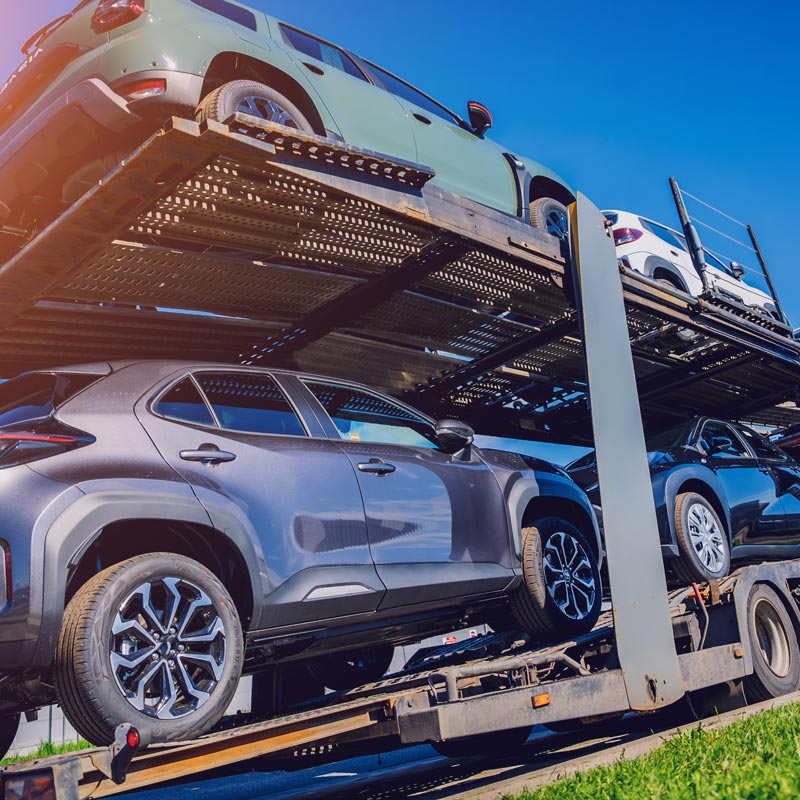
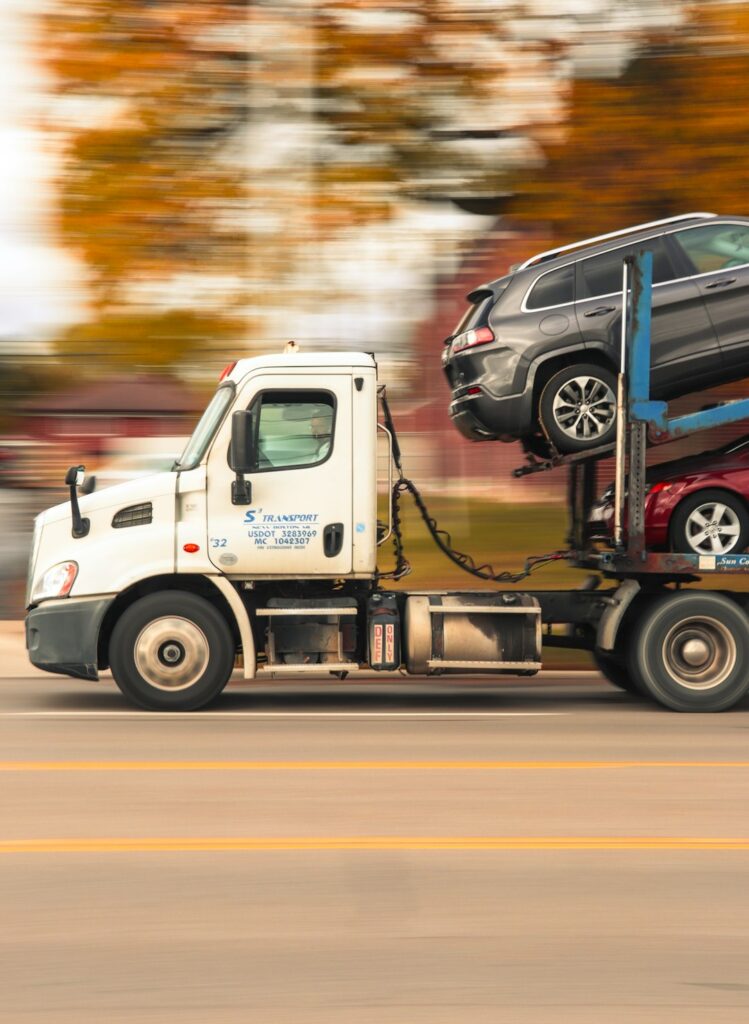
Open transport does expose a vehicle to normal outdoor conditions, including rain, road dust, wind, and sunlight. That does not automatically mean the car is unprotected. Open carriers use upper and lower decks, wheel restraints, ramps, and other equipment designed to keep vehicles stable while moving.
The main difference is exposure, not whether the vehicle is secured. A car on an open trailer may arrive with ordinary travel dust or water spots, especially after a long trip or during unsettled weather. Small amounts of surface dirt are not necessarily evidence of damage.
Residents in Uniondale may also want to consider seasonal conditions. Winter road treatment, strong coastal winds, heavy rain, and summer heat can affect the vehicle’s exterior during a trip. Washing the car before delivery can make it easier to identify new scratches, dents, or residue during the inspection.
When is enclosed transport useful?
Enclosed transport places the vehicle inside a covered trailer, shielding it from most road debris and direct weather exposure. This option is often considered for vehicles with delicate finishes, collector value, custom modifications, or strict cleanliness requirements.
Enclosed transport does not eliminate every risk. Loading equipment, trailer movement, and handling procedures still matter. A covered trailer also does not guarantee that a vehicle will arrive completely free of dust or minor environmental residue.
The practical question is whether protection from outdoor exposure justifies the additional cost or scheduling limitations. For an ordinary daily-use vehicle, open transport may provide adequate physical protection. For a highly finished, restored, or unusually low vehicle, enclosed equipment may offer useful additional safeguards.
What happens before the car is loaded?
A condition inspection should take place before loading. The vehicle’s exterior is examined for existing dents, scratches, chips, cracked glass, wheel damage, and other visible conditions. These findings are recorded on a bill of lading or inspection report, often with written notes and photographs.
The owner should also inspect the vehicle personally before handing it over. Useful steps include:
- Wash the exterior if weather and conditions allow
- Photograph each side, the roof, wheels, windows, and bumpers
- Take close-up pictures of existing damage
- Record the approximate mileage
- Note warning lights or mechanical issues
- Remove antennas, loose accessories, and removable attachments
- Confirm that the fuel level is low but sufficient for loading and unloading
Photographs should show the date when possible and include enough detail to identify the vehicle. Taking pictures in daylight is usually more helpful than photographing a wet, dark, or dirty surface.
Can personal belongings be left inside the vehicle?
Personal belongings create avoidable risk during transport. Items can shift under braking and vibration, damage the interior, interfere with pedals or controls, or increase the vehicle’s weight beyond what was expected.
Loose items should generally be removed from the passenger area, trunk, glove compartment, door pockets, and center console. Special attention is needed for laptops, tools, glass objects, medications, important documents, and valuables.
Some transport arrangements may permit a limited amount of property in the vehicle, but any allowance should be confirmed in writing before loading. Personal items may not receive the same protection or insurance treatment as the vehicle itself.
Is the vehicle covered by insurance during transit?
Carriers generally maintain cargo coverage for damage that occurs while a vehicle is in their custody, but coverage is not unlimited and may contain exclusions. The policy may address collision, theft, fire, weather-related events, or loading damage differently.
Before transport, ask for clear information about:
- The type of cargo coverage in effect
- Policy limits and deductibles
- Exclusions for personal belongings
- Treatment of preexisting damage
- Procedures for reporting a claim
- Whether modifications or specialty equipment are covered
- What happens if damage is discovered after delivery

A vehicle owner’s personal auto policy may also contain relevant provisions, but policies differ. Coverage questions are best answered by reading the applicable policy or speaking with the insurer rather than assuming that every transport-related loss is covered.
What should happen at delivery?
The delivery inspection is the second major protection step. The vehicle should be examined before the final paperwork is signed, using the original inspection report and photographs for comparison.
Check the following areas:
- Bumpers, mirrors, doors, fenders, and quarter panels
- Windshield and other glass
- Wheels and tires
- Roof and hood
- Underside and lower body panels
- Interior surfaces and controls
- Odometer and fuel level
- Warning lights or new mechanical symptoms
Inspect the vehicle in daylight when practical. If weather or lighting makes a proper inspection impossible, the condition should be documented before delivery is accepted. Any new damage should be written on the delivery paperwork with specific details, not described only as “damage noted.”
A signed delivery document can affect later claims, so it should be read carefully. Keep copies of the inspection records, photographs, transport documents, and written communications.
What protection issues are easy to overlook?
Several risks receive less attention than straps and weather. A vehicle with a weak battery, low tire pressure, leaking fluids, or a damaged parking brake may be harder to load safely. A car that does not run may require a winch, special equipment, or additional handling instructions.
Other overlooked issues include:
- Aftermarket spoilers or ground effects
- Oversized tires or altered suspension
- Roof racks and removable cargo equipment
- Electric vehicles with specific towing or shutdown procedures
- Convertible tops that are not fully secured
- Alarm systems or electronic parking brakes
- Vehicle keys that do not operate locks or ignition systems
Accurate information before pickup allows the carrier to plan for these conditions. Hiding a mechanical or clearance problem can create delays and increase handling risk.
What can an owner do to reduce the chance of damage?
The most useful preparation is accurate documentation and honest disclosure. A clean, lightly loaded, mechanically prepared vehicle is easier to inspect, secure, and deliver.
For households in Uniondale, scheduling may also be affected by narrow residential streets, parked cars, seasonal weather, or limited space for a large trailer to maneuver. A safe, legal pickup location with enough room for loading can reduce the need for rushed repositioning or complicated handling.
Protection during transit is therefore a shared process: the carrier provides suitable equipment and secure procedures, while the owner provides accurate vehicle information, removes loose property, documents the starting condition, and performs a careful delivery inspection.